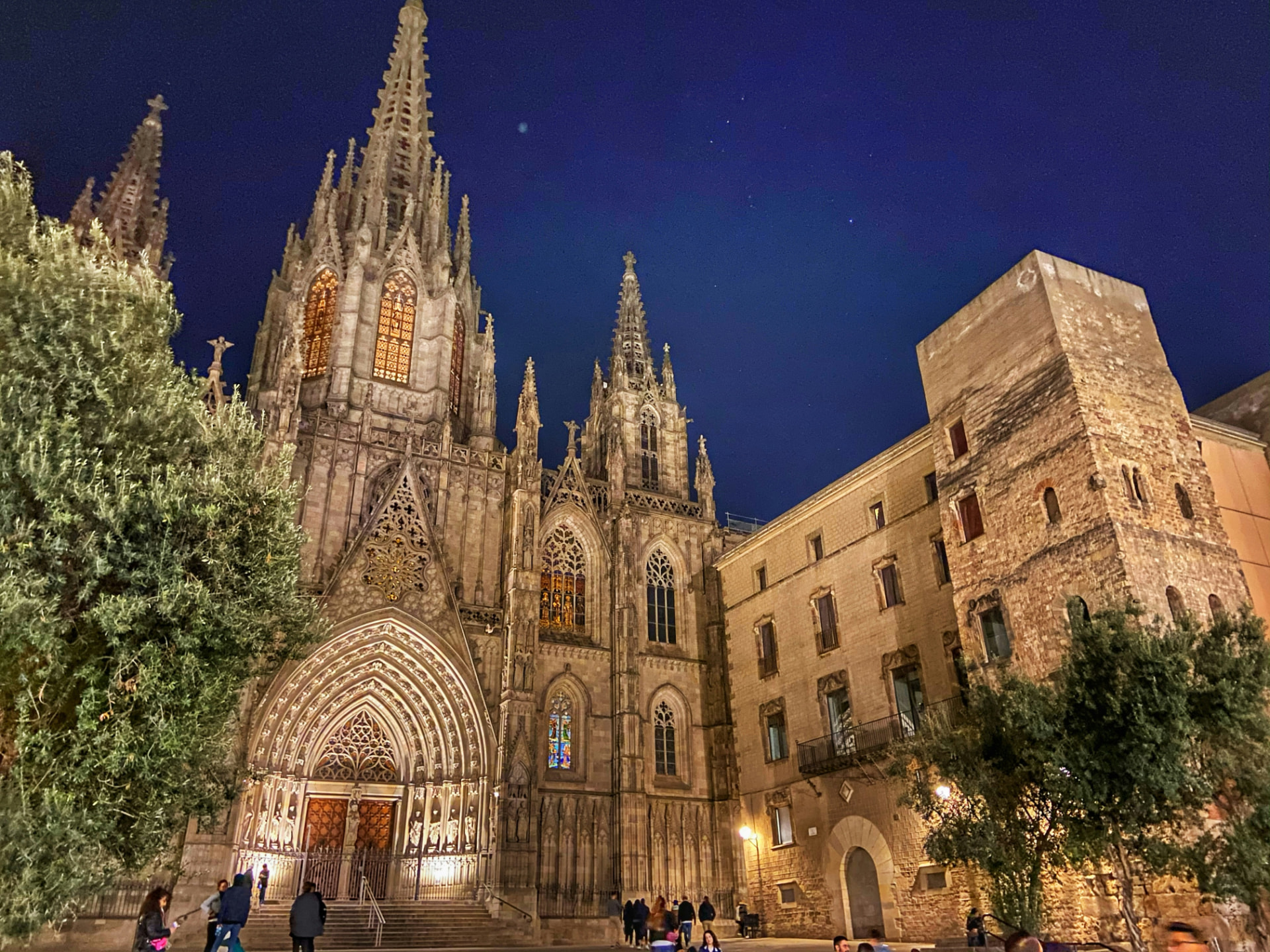
Historic city guide by G.L. Cooper
Barcelona: Roman Stones, Gaudi Skies
A Roman town buried inside a medieval one, wrapped in the most inventive architecture in Europe - and the sea at the end of the street.
Most visitors come to Barcelona for Gaudi and stay for the Gothic Quarter. The city began as Roman Barcino, and you can still walk its walls; the medieval town grew on top and kept the street plan; then, at the end of the nineteenth century, a burst of Catalan Modernisme threw Gaudi's stone waves and coloured tile over the newer districts. Very few cities let you cross two thousand years in a twenty-minute walk.
It is also a city with strong opinions about itself. This is Catalonia, not a generic slice of Spain: the language on the street signs is Catalan, the food tradition is its own, and tapas and flamenco are borrowed from elsewhere. Knowing that will make you a better guest, and get you better meals.
Know Before You Go
Language: Catalan and Spanish are both official. Catalan comes first on signs and menus. English is widely spoken in the centre.
Getting around: A single metro or bus ticket is 2.90 euro. The T-casual, ten journeys in one zone, is 13.00 euro and is the right buy for most visits - but it cannot be shared between two people on the metro. Fares rose in January 2026.
From the airport: The metro's airport ticket costs 5.90 euro and is sold only for that journey; ordinary passes do not cover it. The Aerobus runs to Placa de Catalunya and is quicker with luggage.
Tourist tax, and it doubled this year: Since April 2026 you pay a per-person, per-night tax on top of your room rate - about 12 euro at five-star hotels, 8.40 euro at four-star, 7 euro at three-star and below, and 9.50 euro in a tourist apartment. It is charged for a maximum of seven nights, under-17s are exempt, and it usually is not in the headline booking price. Two people for five nights in a five-star adds roughly 120 euro.
Meal times are late: Lunch is 14:00-15:00; dinner is 21:00. Anywhere serving a full dinner at 19:00 in the centre is cooking for tourists only.
Pickpockets are the one real risk: Violent crime against visitors is rare; bag and phone theft is not. La Rambla, La Boqueria, Placa de Catalunya, the Sagrada Familia perimeter, Barceloneta beach and metro lines L1, L3 and L5 are the known hotspots. Wear your bag in front on the metro, keep your phone out of a back pocket, and be most alert in the second you stop to take a photo - that is when it happens.
Book ahead or miss out: Park Guell and the Sagrada Familia regularly sell out days in advance. Buy timed tickets before you fly.
Best time to go: May to June and September to October. August is hot, and many small restaurants close for the month.
Barcelona guide
Explore the sections
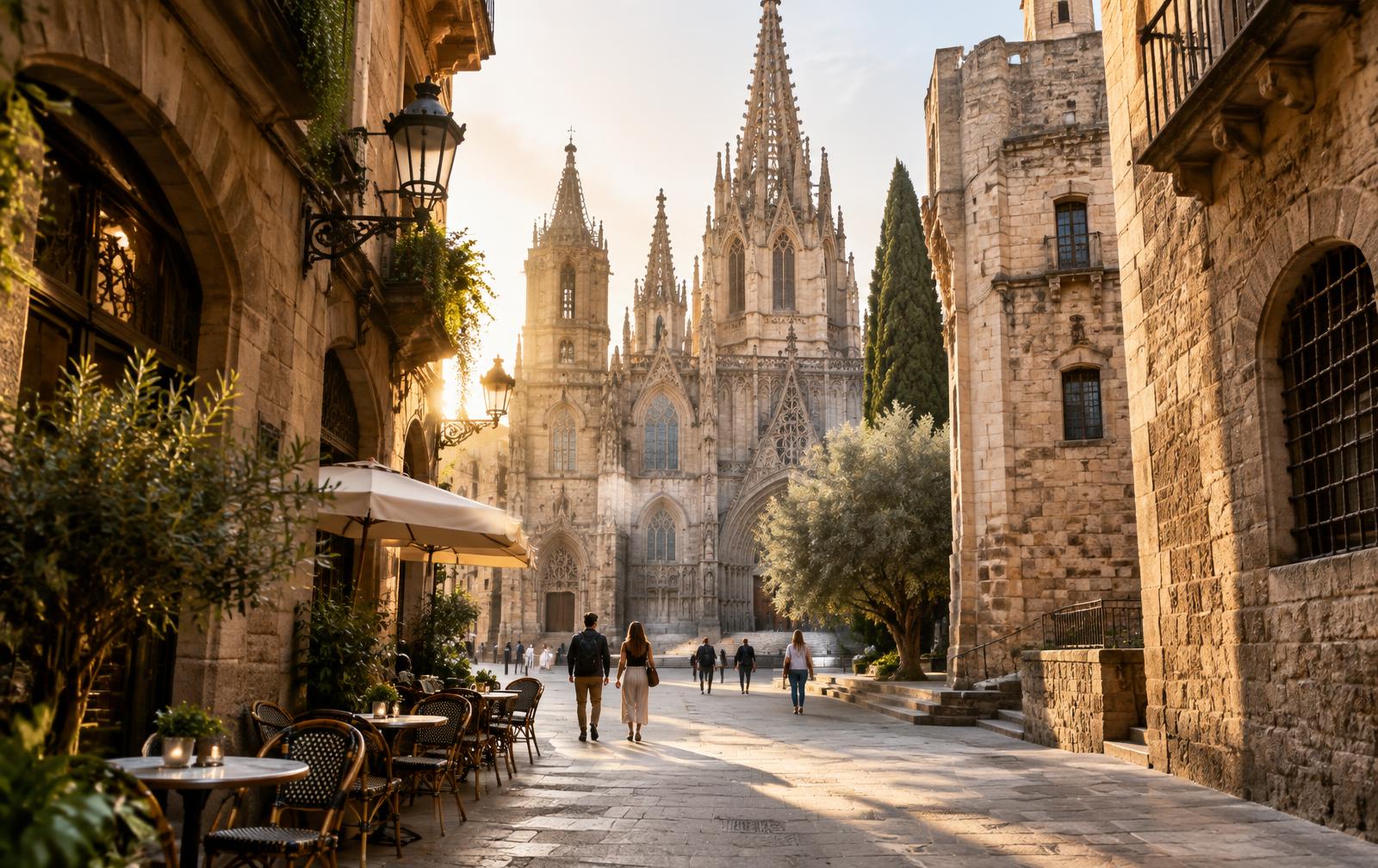
Featured · Heart of the guide
The Gothic Quarter
The historic heart of the Barcelona guide.
Open sectionBarcelona
Top Sights
Barcelona’s essential sights and practical visitor notes.
Open sectionBarcelona
Food and Tapas
Food, tapas and places to pause between walks.
Open sectionBarcelona
Day Trips
Historic places within reach of Barcelona.
Open sectionBarcelona
Three Days in Barcelona
A relaxed three-day route through Barcelona.
Open sectionBarcelona
Tours
Guided experiences and booking notes.
Open sectionBarcelona
Where to Stay
Barcelona areas and accommodation choices.
Open section