Historic city guide by G.L. Cooper
Dubrovnik: The Walled City
A merchant republic that bought its freedom for centuries — and the stone circuit that kept it.
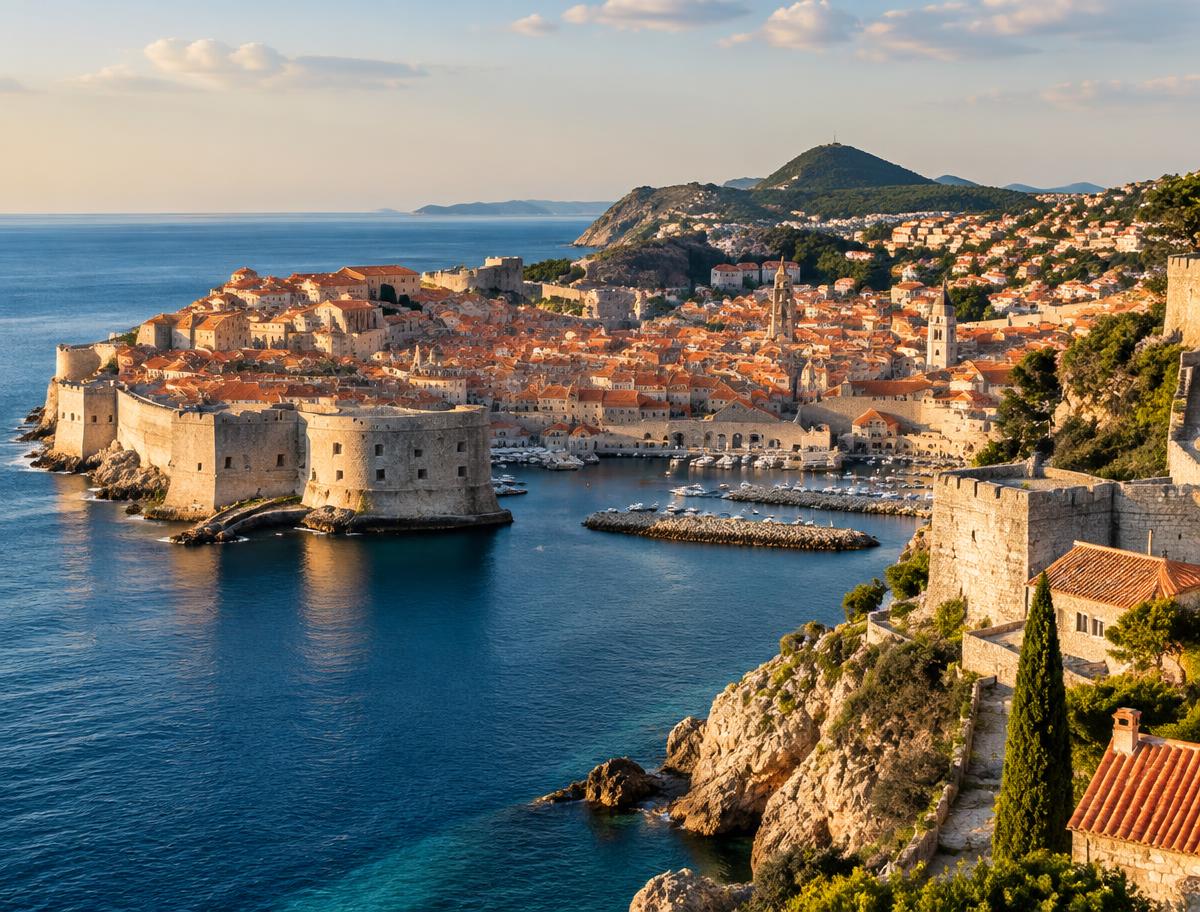
Dubrovnik was the Republic of Ragusa, a small maritime state that stayed independent for centuries by trading shrewdly and paying tribute to whoever was strongest that decade. The evidence is still standing: two kilometres of unbroken wall, a Rector's Palace built for a head of state who served one month at a time, and a main street rebuilt in one uniform sweep after the earthquake of 1667.
It is also a very small city that receives a very large number of people. The Old Town is ten minutes end to end, and on a three-ship cruise day the middle of it is barely walkable at noon. Nothing about that spoils the place — it just means the hour you choose matters more here than anywhere else in this series. Start early, climb the walls before the sun is high, and keep the middle of the day for the sea.
New
Plan your trip with our AI travel planner
Tell us your dates, interests and pace, and get a personalised Dubrovnik itinerary built on the same checked facts as this guide.
Know Before You Go
Money: Croatia has used the euro since January 2023 — there is no kuna cash economy left. Cards work almost everywhere, including on city buses, but carry some cash for market stalls, small konobas and the cliff bars.
From the airport: Dubrovnik Airport sits about 20 km southeast at Čilipi, 25 to 35 minutes by road and up to an hour in August traffic. The licensed Platanus shuttle costs €10 one way and €15 return, leaves roughly 30 minutes after each arrival and stops at Ploče Gate before Gruž bus station. Libertas lines 11, 27 and 38 also serve the airport more cheaply but far less often. A taxi to the centre is typically quoted at €30 to €40.
Getting around: Libertas runs the city buses. A ticket bought from the driver is €2.50, while a one-hour ticket bought in advance at a kiosk or in the app is €1.73; a 24-hour ticket is €5.31 and 72 hours €11.95. Note that a rise in the on-board fare was proposed in late 2025 and had not been confirmed as adopted when this page was written.
On foot: Pile Gate to Ploče Gate is a ten-minute walk down Stradun. Gruž port is about 2 km, Lapad 2.5 to 3 km — most people take bus 1A, 1B, 6 or 8 rather than walk those with luggage. The side lanes off Stradun are stepped, and the limestone is slippery when wet.
Tourist tax: The sojourn tax for the Dubrovnik area is €2.65 per person per night from 1 April to 30 September and €1.85 the rest of the year, added by your accommodation. Under-12s are exempt nationally. The county sets rates annually, so the exact 2026 figure is worth confirming.
Cruise days: The port publishes its full 2026 arrivals schedule and caps daily calls. On days with two or three ships in port the Old Town surges between roughly ten and two. Check portdubrovnik.hr for your dates and plan the walls for early morning.
Tipping: Not obligatory. Rounding up, or around 10 percent for good table service, is the usual practice rather than any published rule.
Best time to go: May, June, September and early October: warm sea, mild air and noticeably thinner crowds than July and August, when the mean temperature sits above 25°C and the Summer Festival fills the city. The 77th Dubrovnik Summer Festival runs 10 July to 25 August 2026. November to March is quiet, wet and cheap, with many places on reduced hours.
Prices and hours were checked in September 2026 and are flagged in the text wherever only third-party sources were available. Croatian ticket prices are revised between seasons, so confirm with the official site before you travel.
Dubrovnik guide
Explore the sections
Featured · Heart of the guide
The Old Town
An early-morning walking route through the walled city, timed to stay ahead of the cruise crowds.
Open sectionDubrovnik
Top Sights
The walls, the cable car, Lokrum and the museums — what each costs in 2026 and which tickets overlap.
Open sectionDubrovnik
Food and Wine
Dalmatian cooking, Ston oysters and Pelješac reds — and how to avoid the Stradun mark-up.
Open sectionDubrovnik
Day Trips
Cavtat, the Elaphiti Islands, Ston, Korčula, Mostar and Kotor — which work on your own and which need a tour.
Open sectionDubrovnik
Three Days in Dubrovnik
A tested three-day route: walls at opening, sea in the afternoon, and one day out along the coast.
Open sectionDubrovnik
Tours
Which guided experiences are worth the money in Dubrovnik, and honest price ranges.
Open sectionDubrovnik
Where to Stay
Old Town, Ploče, Pile, Lapad, Gruž or Cavtat — the honest trade-offs on noise, steps and price.
Open section